5 Powerful Yoga Mantras for Daily Chanting (Benefits & How to Chant)
Introduction
Chanting yoga mantras is a powerful daily practice that helps calm the mind, improve focus, and deepen meditation.
Unlike mantra meanings, which explain the philosophy, mantra chanting is about practice and experience.
In this guide, you’ll learn how to chant 5 powerful yoga mantras, the best time to use them, and the real-life benefits they offer for mental and emotional well-being.
👉 If you’re looking for yoga mantra meanings explained in Kannada, read our detailed guide:
ಯೋಗ ಮಂತ್ರ ಮತ್ತು ಅದರ ಅರ್ಥ ತಿಳಿಯಿರಿ
1. Om (ॐ) Mantra
How to Chant Om Mantra
- Sit comfortably with your spine straight
- Close your eyes and relax your shoulders
- Inhale deeply and chant “Ooooo–Mmmm” slowly
- Feel the vibration in your chest and head
Best Time to Chant
- Early morning (Brahma Muhurta)
- Before meditation or yoga practice
Practical Benefits
- Calms the nervous system
- Improves concentration
- Reduces stress and anxiety
- Prepares the mind for meditation
2. Gayatri Mantra
How to Chant Gayatri Mantra
- Sit facing the rising sun if possible
- Chant slowly with awareness of each word
- Repeat 11 or 108 times using a mala
Best Time to Chant
- Morning hours after bath
- Before study or mental work
Practical Benefits
- Enhances clarity and intelligence
- Improves memory and focus
- Brings mental discipline
- Supports spiritual growth
3. Shanti Mantra

How to Chant Shanti Mantra
- Chant at the beginning or end of yoga sessions
- Focus on slow breathing
- Allow the sound to settle naturally
Best Time to Chant
- Before yoga classes
- After meditation
- During stressful moments
Practical Benefits
- Creates inner calm
- Reduces restlessness
- Promotes emotional balance
- Helps transition into silence
4. Guru Mantra
How to Chant Guru Mantra
- Chant with gratitude and respect
- Sit quietly and focus on the heart center
- Avoid rushing through the mantra
Best Time to Chant
- Before learning or teaching
- During personal reflection
- On Guru Purnima or special days
Practical Benefits
- Builds humility and discipline
- Improves learning mindset
- Strengthens inner guidance
- Encourages self-awareness
5. Mahamrityunjaya Mantra
How to Chant Mahamrityunjaya Mantra
- Sit or lie down comfortably
- Chant slowly with steady breathing
- Keep awareness on healing and positivity
Best Time to Chant
- Early morning or evening
- During illness or recovery
- When facing fear or uncertainty
Practical Benefits
- Promotes emotional strength
- Supports healing mindset
- Reduces fear and insecurity
- Encourages inner resilience
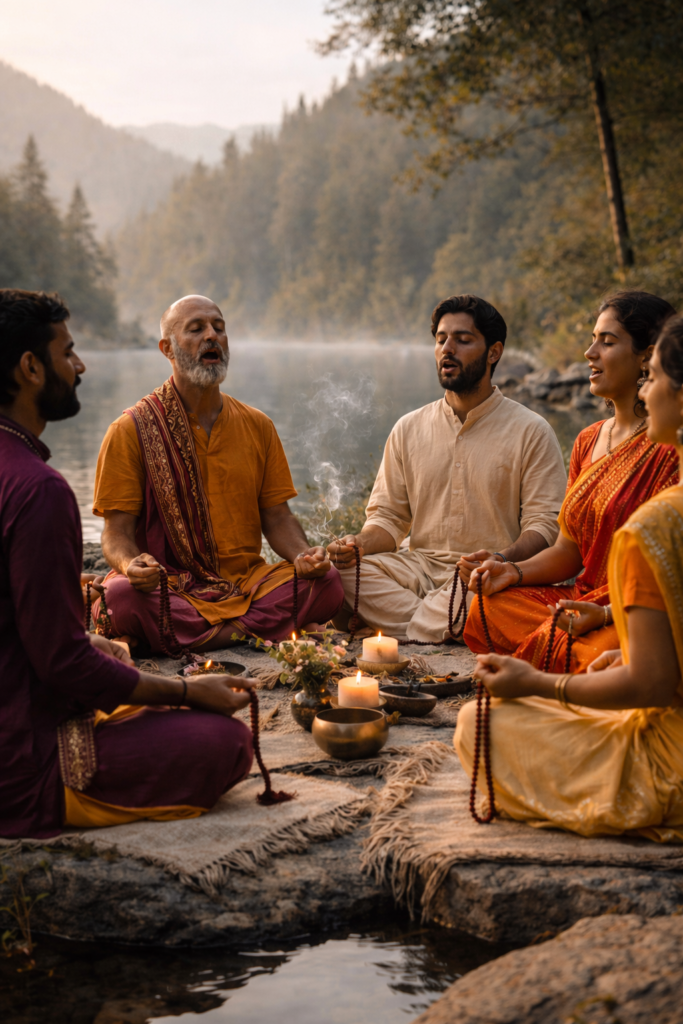
How Many Times Should You Chant a Mantra?
For beginners:
- 11 times – good for daily practice
- 21 times – improves focus
- 108 times – deeper spiritual discipline
Consistency is more important than count.
Tips for Effective Mantra Chanting
- Choose one mantra and stick with it
- Chant in a quiet, clean space
- Maintain a calm and relaxed posture
- Avoid multitasking while chanting
- Practice daily, even if only for 5 minutes
According to the Ministry of AYUSH, regular yoga and meditation practices, including mantra chanting, support mental well-being and emotional balance.
How to Choose the Right Yoga Mantra for Yourself
Choosing the right yoga mantra depends on your intention and current mental state. If you seek calmness and stress relief, simple sound-based mantras like Om are ideal. For improved focus and learning, structured mantras such as the Gayatri Mantra are commonly practiced.
Those experiencing emotional stress or uncertainty may benefit from slower, healing chants like the Mahamrityunjaya Mantra, while gratitude-based mantras are helpful during reflection or study. Rather than chanting multiple mantras daily, beginners should start with one mantra and practice it consistently for a few weeks to experience its full benefit.
Frequently Asked Questions (FAQ)
Can beginners chant yoga mantras?
Yes. Anyone can chant yoga mantras. No prior experience is required.
Should mantras be chanted aloud or silently?
Beginners can chant aloud. Silent chanting is suitable for meditation.
Is pronunciation very important?
Correct pronunciation helps, but sincerity and focus matter more.
Conclusion
Yoga mantra chanting is not about perfection — it’s about regular practice and awareness.
By chanting even one mantra daily, you can experience better focus, emotional balance, and inner calm.
For a deeper understanding of mantra philosophy, read our Kannada guide on yoga mantra meanings.
One Comment